|
|||||||||||||||||||
|
|
|||||||||||||||||||
|
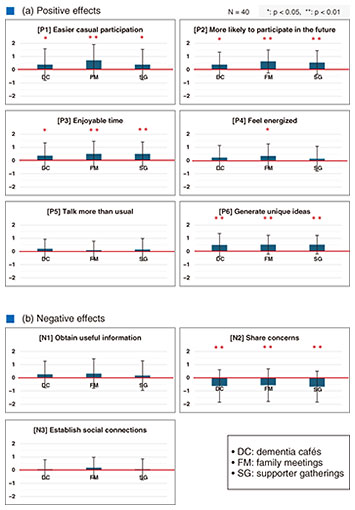
Regular Articles Co-creative and Technological Approaches to Reducing Dementia-related StigmaAbstractThis article introduces two approaches aimed at eliminating prejudice against people living with dementia. One is a co-creation approach carried out jointly with high school students and individuals with dementia, and the other is a technological approach to addressing biases embedded in generative AI (artificial intelligence). We will continue investigating these approaches to help reduce prejudice and discrimination against social minorities. Keywords: dementia, stigma, co-creative  1. IntroductionDementia is a global social issue, with more than 55 million people affected worldwide as of 2020 and with 139 million projected to be affected by 2050 [1]. Books, films, news coverage, and social media posts focusing on dementia have thus been increasing. However, portrayals of dementia in news media, fiction, and social media have been suggested to possibly contribute to persistent stigma by modeling fear, shame, and avoidance and reinforcing stereotypes [2]. Such prejudice is said to partly stem from a lack of awareness and understanding of dementia [3]. We are researching two approaches to reduce stigma toward dementia. One is a co-creative approach that involves working collaboratively with stakeholders, including people living with dementia, their families, and caregivers. The other is a technological approach that addresses biases embedded in generative AI (artificial intelligence) systems that support people with dementia and related stakeholders. Both approaches are detailed below. 2. Co-creative approachVarious awareness-raising activities and communities have been established to reduce stigma toward dementia. To further enhance such initiatives and communities, they need to be co-created together with people living with dementia, so that efforts can be developed that align with their genuine needs. We have been working with high school students to promote dementia awareness and develop community-based approaches for engaging with people living with dementia while organizing co-creation workshops with individuals with dementia as well as their families and caregivers. However, only in relatively few cases do high school students take the lead in such co-creation efforts, and their effects have not yet been clearly demonstrated. Therefore, this study aims to clarify what effects emerge when youth take the initiative in organizing dementia-related (DR) events. We conducted a DR event that was planned and led by high school students. Participants included people living with dementia, their family members, and local supporters. During the event, participants discussed or experienced support ideas that had been proposed by the students. To evaluate the effects, we conducted a questionnaire survey using a five-point Likert scale. Participants were asked to rate six positive and three negative effects that we had hypothesized earlier. Figure 1(a) shows the results comparing the ratings for this event with those for other DR events: dementia cafés, peer or family meetings, and supporter gatherings. Each value in this graph represents the mean difference between the ratings of this event and other DR events, measured using the five-point Likert scale. Therefore, a positive value indicates that, for the corresponding combination of a survey item and other DR events, this event received a higher rating. Conversely, a negative value indicates that other DR events received a higher rating than this event. As shown in this figure, the mean scores for this youth-led event were higher than those for all other events across all six positive effect items. In other words, participants tended to evaluate this event more positively overall. However, only four items showed statistically significant differences across all of the comparison DR events: “Easier casual participation,” “More likely to participate in the future,” “Enjoyable time,” and “Generate unique ideas.” Figure 1(b) presents the results for negative effects. The mean scores for this event were lower than those for the other events only for the item “share concerns,” indicating that participants felt somewhat less comfortable sharing their concerns in this setting. For all other items, the scores were similar or slightly higher.
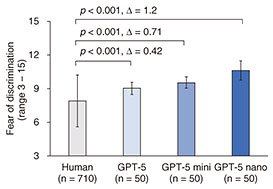
We now share our interpretations on the basis of these results. The participation of high school students was suggested to enhance ease of participation, enjoyment, willingness to participate, and the generation of unique ideas. Therefore, if other DR events are perceived as lacking in these aspects, involving high school students may be a promising way to address these challenges. The exchange of business cards among participants also suggests that the networking session may have facilitated opportunities for network formation and relationship building. Consequently, involving high school students may also be effective in attracting new participants and fostering interaction among attendees. In contrast, the presence of high school students showed limited effects on increasing participants’ sense of vitality or encouraging more conversation than usual. Thus, if the goal is to enhance these aspects, simply including high school students may not be sufficient. 3. Technological approachLarge language models (LLMs) have advanced natural language processing capabilities and have been increasingly studied for use in conversations with people living with dementia [4]. However, it is well established that LLMs can exhibit negative stereotypes and beliefs (stigma) like those held by humans. Understanding the extent to which LLMs exhibit DR stigma is critical for evaluating their appropriateness and effectiveness in dementia-care applications. In this study, we assessed DR stigma in LLMs by inputting a human DR stigma assessment instrument (the Japanese version of the Dementia Stigma Assessment Scale [5]) into the models and evaluating their outputs [6]. We conducted analyses using three OpenAI API (application programming interface) models (GPT-5, GPT-5 mini, and GPT-5 nano [7]) on the basis of responses collected 50 times per model. The results of the LLMs were compared with those of a previous study in which 710 Japanese participants completed the same scale [8]. The comparison was conducted using two-sided Welch’s t-tests, and Holm-adjusted p-values were used to correct for multiple comparisons. Effect sizes were expressed as Glass’s delta and interpreted as small (0.2 to 0.5), medium (0.5 to 0.8), or large (≥ 0.8) [9]. Figure 2 shows the scores of the Japanese participants and LLMs on fear of discrimination, one of the four dimensions assessed with the scale. The results indicate that all models exhibited higher scores on fear of discrimination than Japanese participants, suggesting a greater level of fear of discrimination in LLMs. This greater fear of discrimination in LLMs may discourage people with dementia from disclosing their condition or seeking help from others. Therefore, we suggest that DR stigma in LLMs needs to be investigated to prevent potential harm in their use for dementia care.
4. SummaryWe introduced two approaches—co-creative and technological—aimed at reducing stigma toward people living with dementia. Regarding the co-creative approach, we discussed the impact of involving high school students alongside people with dementia and other stakeholders. Regarding the technological approach, we examined DR stigma embedded in LLMs and highlighted the importance of evaluating their appropriateness and effectiveness when applied to dementia care. On the basis of these findings, we aim to collaborate with people living with dementia, as well as their families and caregivers, to develop appropriate support methods for both reducing stigma toward dementia and alleviating the burden of dementia care through the use of LLMs, thus contributing to a dementia-inclusive society. References
|
|||||||||||||||||||