Building the All-Photonics Network of the near future through a high-speed optical transmission system—and beyond
—First, please tell us about the All-Photonics Network.
The All-Photonics Network (APN) is a foundational technology of NTT’s IOWN (Innovative Optical and Wireless Network) initiative, which is designed to transmit data—from end devices to a backbone network—using light to the greatest extent possible. With the recent rapid spread of artificial intelligence (AI), data traffic between datacenters and demand for edge computing have been surging; thus, NTT is exploring the application of the APN to datacenter networks by harnessing its capabilities for ultra-low latency, high capacity, and low power consumption. For instance, provision of an APN service began in January 2026 under the name “JPDC All-Photonics Connect,” linking select datacenters within Tokyo.
With current APN designs, a network configuration based on point-to-point (PtP) connections in which users exclusively use specific optical wavelengths and paths to achieve ultra-high-speed, low-latency communications between endpoints is assumed. The immediate priority is to expand and firmly establish this PtP-based APN nationwide. There is also growing demand for edge computing, where users access edge datacenters located near them to use applications such as AI. Although current setups rely on existing networks for connectivity, network-induced latency can compromise the performance of applications such as AI. Looking further ahead, I see a future in which users connect to datacenters directly via the APN and benefit from its low-latency capabilities.
The PtP configuration, however, presents two key issues in regard to accommodating multiple users. The first issue is the limited number of available wavelengths. In this connection configuration, a single user occupies a specific optical wavelength; however, accommodating many users or handling increased data volumes requires installing additional optical fibers and communication paths since the number of wavelengths that can be multiplexed on a single fiber is limited. The second issue is the complexity and high cost of the user-side optical transmission equipment necessary to achieve high-speed, high-capacity communications. This can be a barrier to widespread adoption of the PtP configuration by a diverse range of users. Therefore, a new mechanism capable of enhancing performance while suppressing costs is essential. To address these issues, I’m currently researching a high-speed optical transmission system based on point-to-multipoint (PtMP) connections (Fig. 1).
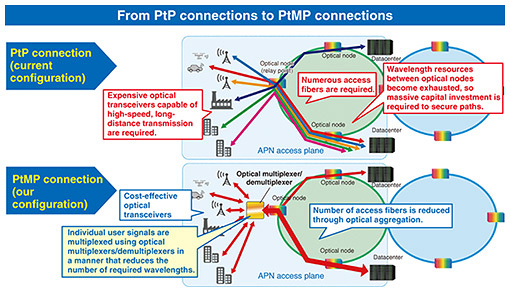
Fig. 1. Comparison of the current PtP-based network and our PtMP-based network.
—How does the PtMP configuration address the concerns associated with the PtP configuration?
PtMP connections significantly reduce the number of optical wavelengths and fibers within the APN by aggregating traffic via optical splitters and multiplexing signals on the same wavelength. While the PtMP configuration allows for efficient connectivity by reusing existing optical-access-network infrastructure, the conventional intensity modulation/direct detection (IM-DD) method—although inexpensive and energy-efficient—is susceptible to signal degradation caused by optical attenuation and fiber propagation. Performance is thus limited to 20-km transmission and 32 branches. While the advanced digital coherent technology enables ultra-high-speed, long-distance transmission, its high cost and power consumption make it unsuitable for widespread adoption. To overcome these limitations cost-effectively, the research that I’m pursuing is based on a two-pronged approach, (i) a hybrid configuration that combines the simplicity of IM-DD with the high performance of digital coherent technology and (ii) simplified digital coherent technology (Fig. 2).
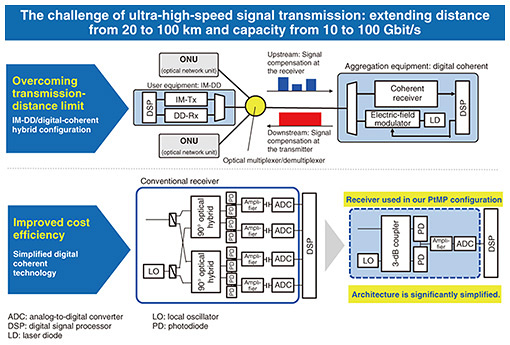
Fig. 2. Overcoming transmission-distance limits and improving cost-efficiency.
Focusing on the asymmetric nature of PtMP connections, namely, the aggregation side (the P-side) is shared among multiple users, the hybrid configuration makes optical transceivers on the user side more cost-effective by concentrating functions that compensate for performance degradation in optical transmission on the P-side. As its name indicates, simplified digital coherent technology aims to simplify the key components of digital coherent transmission—specifically the coherent receiver and digital signal processor (DSP)—by optimizing DSP processing architectures and data-transmission formats. Through research on this two-pronged approach, we aim to simultaneously address three challenges, i.e., extending transmission distance, increasing data capacity, and reducing costs, by reconfiguring transmission functions to leverage PtMP connections and fundamentally improving optical transmission systems. We have regularly presented the findings of this research at top-tier international conferences such as OFC (Optical Fiber Communication Conference and Exhibition) 2026 and ECOC (European Conference on Optical Communication) 2025 and 2024. While anticipating practical implementation of the PtMP-based APN for 2035 or later, we are aiming to provide a wide range of users with services offering 100-Gbit/s transmission performance, which is a tenfold increase over the 10 Gbit/s currently becoming the standard for optical access networks.
—Please tell us more about simplified digital coherent technology.
A method for simplifying digital coherent technology was proposed by the University of Cambridge. Conventional digital coherent technology requires highly complex and expensive optical components on the receiver side to fully use the properties of light, such as polarization and phase. However, their method uses a special signal pattern (known as time-polarization coding) derived from wireless communication technology. It thus enables the complex task of polarization separation to be handled entirely through digital computation. The wavelength of the received laser light is also intentionally shifted slightly (so-called heterodyne reception), and the mixed signals are then correctly separated by subsequent digital processing called IQ separation (where “I” and “Q” respectively represent the in-phase and quadrature components of two amplitude-modulated sinusoidal signals).
In short, simplified digital coherent technology transforms coherent receivers, which are typically large-scale and costly, into compact, low-power, and low-cost units by simplifying their configuration and signal processing. Adding to the conventional method proposed by the University of Cambridge, NTT has proposed a method for reducing the receiver’s electrical bandwidth by alternately transmitting “I” and “Q” signals on the time axis on the transmitter side. Although this method increases the complexity of the transmitting equipment (by adding the required IQ interleaving unit), it makes it possible to mount coherent receivers on the user equipment side in a manner that promises further improved performance (Fig. 3).
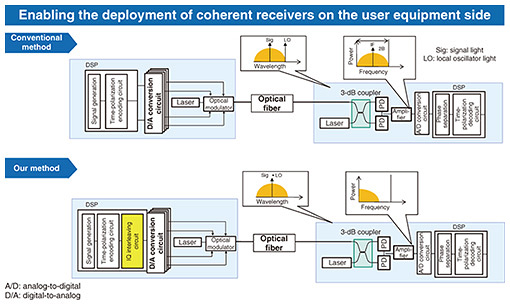
Fig. 3. Simplified digital coherent technology.
Future possibilities envisioned with the high-speed optical-transmission system
—Please tell us about the prospects and potential applications of this research.
I believe it is highly significant that if the various technologies stemming from research into PtMP connections can be practically applied, a wide range of users will be able to enjoy some of the benefits of the long-distance, high-capacity transmission provided by digital coherent technology, which have been limited to communications between datacenters. Since the PtMP configuration uses a simplified version of digital coherent technology, it inevitably results in a performance gap compared to full-scale digital coherent technology. Nevertheless, I consider it crucial that telecommunications operators respond to user needs by implementing a configuration that enables high-speed, high-capacity transmission simply and cost-effectively.
This simplified digital coherent technology also has a wide range of applications. In the field of video distribution, for instance, it enables real-time transmission of high-resolution volumetric video (three-dimensional spatial video) and multi-viewpoint video between locations. In addition to being applied in smart factories and smart homes, this technology is expected to contribute to mobility fields closely linked to our daily lives, such as autonomous vehicles and the remote control of industrial drones. In fields such as telemedicine, the ability to exchange high-definition video and robot-control signals with virtually no latency makes it possible to apply simplified digital coherent technology on the front lines of saving lives. Such applications include supporting advanced remote surgeries—for example, connecting surgical support robots located at two different hospitals via the APN while detecting lesions based on image analysis at edge datacenters.
—Please tell us about NTT Access Network Service Systems Laboratories, where you work.
As a laboratory under the Information Network Laboratory Group, NTT Access Network Service Systems Laboratories offers researchers the opportunity to gain broad experience ranging from cutting-edge core research to development for practical applications. The Laboratories employs specialists across a wide range of fields from network infrastructure technologies (such as optical fiber and cables, civil engineering, and wireless and wired communications) to operations, robotics, and image analysis. For someone like me, whose work involves combining diverse technologies to research efficient and practical communication systems, it is a major advantage to work in an environment in which such multifaceted expertise can be consolidated within a single institute. Our proximity to operating companies such as NTT EAST, NTT WEST, and NTT DOCOMO, enabling direct collaboration and personnel exchange with staff on the ground, is also a major advantage that accelerates the practical implementation of future access network systems. NTT Access Network Service Systems Laboratories is organized in this manner because the development of optical communication systems cannot be completed simply by refining a single component technology; instead, it requires enhancing the overall level of perfection, both as a system and as a business. It brings together leading researchers in a manner that continuously generates results aligned with the prevailing social conditions of the time.
On a personal level, too, I have recently had significantly more opportunities to engage in discussions with manufacturers, network operators, and academics outside Japan through activities such as submitting papers to top-tier international conferences, serving on committees, and giving invited lectures. As I pursue my research amidst such global influences, I’m constantly mindful of focusing not merely on my own research but also on how I can contribute to maximizing the team’s overall results. Just as important as producing cutting-edge results is building partnerships (human networks) with an eye toward practical application and increased efficiency. From now onwards, while continuing to value and cultivate connections both within and outside NTT, I aim to work alongside a diverse group of specialists to steadily actualize the ideal network that I envision.
—Finally, please share a message with our readers.
Working in research and development holds immense appeal. I’m convinced that much like international sporting competitions, research and development is a world in which one has countless opportunities to achieve “world No. 1” status through one’s own efforts—all while engaging in spirited competition with brilliant researchers from around the globe. I feel a strong sense of responsibility to advance research that contributes to the NTT Group’s future profitability and business growth, and that responsibility serves as a powerful driving force and source of deep personal fulfillment for me.
My research cannot be successful through individual effort alone; it requires all stakeholders—ranging from universities, manufacturers, and domestic and international operators to the frontline personnel responsible for daily operations and system configuration—to move forward in close collaboration. If this ambitious challenge resonates with you or sparks your interest, please do not hesitate to get in touch. I look forward to the day that we can create the networks of the future together.